The moment deepfakes stopped looking “fake”
You can feel the shift when a clip no longer “announces” itself as a fake. It’s not the old, rubbery mouth movements or the obvious face cutout anymore. The video looks like something you’d scroll past without thinking: steady lighting, believable skin texture, natural blinking, and audio that matches the room. The moment deepfakes stopped looking fake wasn’t a single viral clip so much as a pattern—more ordinary-looking posts that don’t trip your instincts.
The human brain is tuned to flag mistakes, not to prove authenticity. When the common mistakes disappear, confidence rises fast, especially on a small phone screen with the sound off. Add speed and distraction—commutes, meetings, late-night scrolling—and “good enough” realism becomes persuasive. The most people can’t pause to scrutinize every clip, and that’s exactly the gap these fakes now fit into.
Why the classic tells don’t work anymore
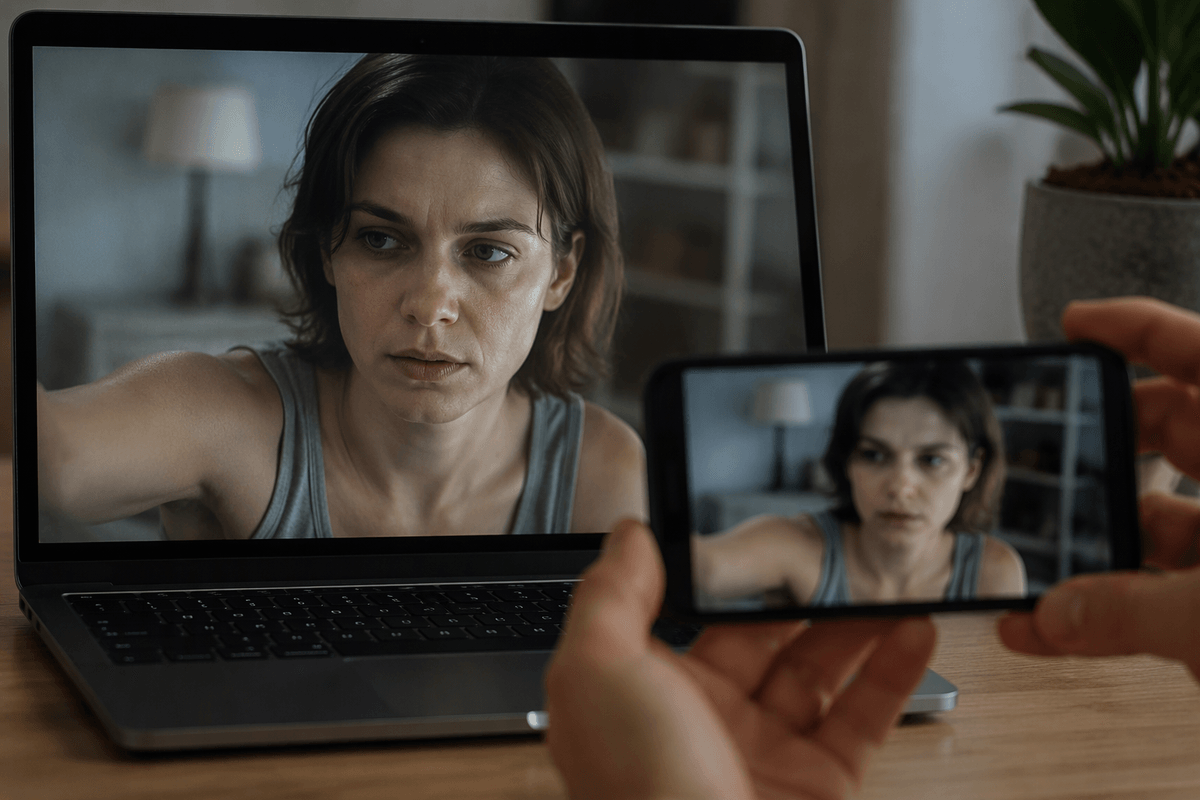
People still reach for the same checklist: “Look for weird hands,” “Watch the teeth,” “Check the eyes for deadness,” “Listen for robotic audio.” Those cues were useful when fakes were clumsy. Now they’re unreliable because many of the most visible errors get corrected automatically or never appear in the first place, especially in short clips designed for scrolling. A creator can generate ten versions, pick the best, and crop or blur away anything suspicious. If you only see a face framed from the shoulders up, “count the fingers” isn’t even an option.
The bigger issue is that realism is no longer a single fragile illusion. It’s layered: the face, the voice, the lighting, the background noise, the camera shake, the compression—all working together. A small mismatch that might have stood out on a paused, full-screen video can disappear once it’s resized, filtered, and reposted. The result is that “spot the glitch” turns into a losing game, and credibility has to lean more on where the media came from and whether the surrounding context holds up.
Training data and models learned human realism
Think about how quickly you’ve gotten used to video calls: you can read tiny cues like a half-smile, a swallowed laugh, a nervous pause. Modern generative models are trained on enormous collections of real faces, voices, and everyday clips, so they’ve absorbed those same patterns. They don’t just paste a face onto a head anymore; they can produce plausible skin texture, micro-expressions, and timing that matches conversational speech. When the training data includes countless angles, lighting conditions, accents, and ages, the output stops looking like an “effect” and starts looking like a normal recording.
The change is also statistical, not artistic. These systems learn what usually comes next—how lips shape common sounds, how cheeks move during certain words, how eyes track a speaker—because they’ve seen millions of examples. That means the old giveaways are less frequent, not because someone hand-fixed every frame, but because the model learned to avoid those errors by default. The high realism often needs better compute, cleaner input, and multiple tries, so the best fakes are usually the ones someone had time and motivation to polish.
Editing pipelines hide flaws before you see them
You’ve seen the same “cleanup” tricks in ordinary content: smoothing filters, color grading, background blur, noise reduction, subtitles that cover a jittery chin. Deepfake creators use that familiar editing pipeline as a shield. Even when a generated face has small issues—an odd shadow under the nose, a lip edge that wobbles for two frames—basic post-production can hide it. Stabilization reduces unnatural head motion. Sharpening and denoising can mask texture artifacts. Cropping keeps the frame tight on the most convincing region and removes distracting hands, jewelry, or body cues that don’t match.
What makes this hard to judge is that the edits look normal. Plenty of real videos are retouched, compressed, and reframed before posting, so “edited” doesn’t equal “fake.” The polished workflow is cheap and fast now. Someone can generate multiple takes, cut around the weak moments, add room tone or music, and publish a version that never shows you the parts that would have triggered doubt.
Compression and social platforms erase forensic clues
Repeated uploads can quickly degrade a video, softening edges, smearing details, and leaving audio with a watery hiss. Beyond making the clip look worse, this processing may erase subtle traces that help investigators assess authenticity, including inconsistent pixel patterns, irregular boundaries around faces, and faint signs of editing. Platforms may resize footage, change its frame rate, apply noise reduction, or remove metadata during delivery. The resulting file is no longer an untouched original; it has been altered for playback and distribution, potentially losing information needed to establish its provenance.
Platform features also affect which details remain visible. Vertical cropping removes context near the edges, automatic captions may cover a speaker’s mouth, and beauty filters smooth skin and lighting in ways that obscure synthetic textures. Access to the original file is rarely guaranteed. The first upload may be unavailable, the uncompressed recording may be missing, and the chain of custody may be unclear. By the time a clip reaches a social feed, zooming in may reveal little because the relevant evidence has already been lost.
It’s an arms race, and detectors lag
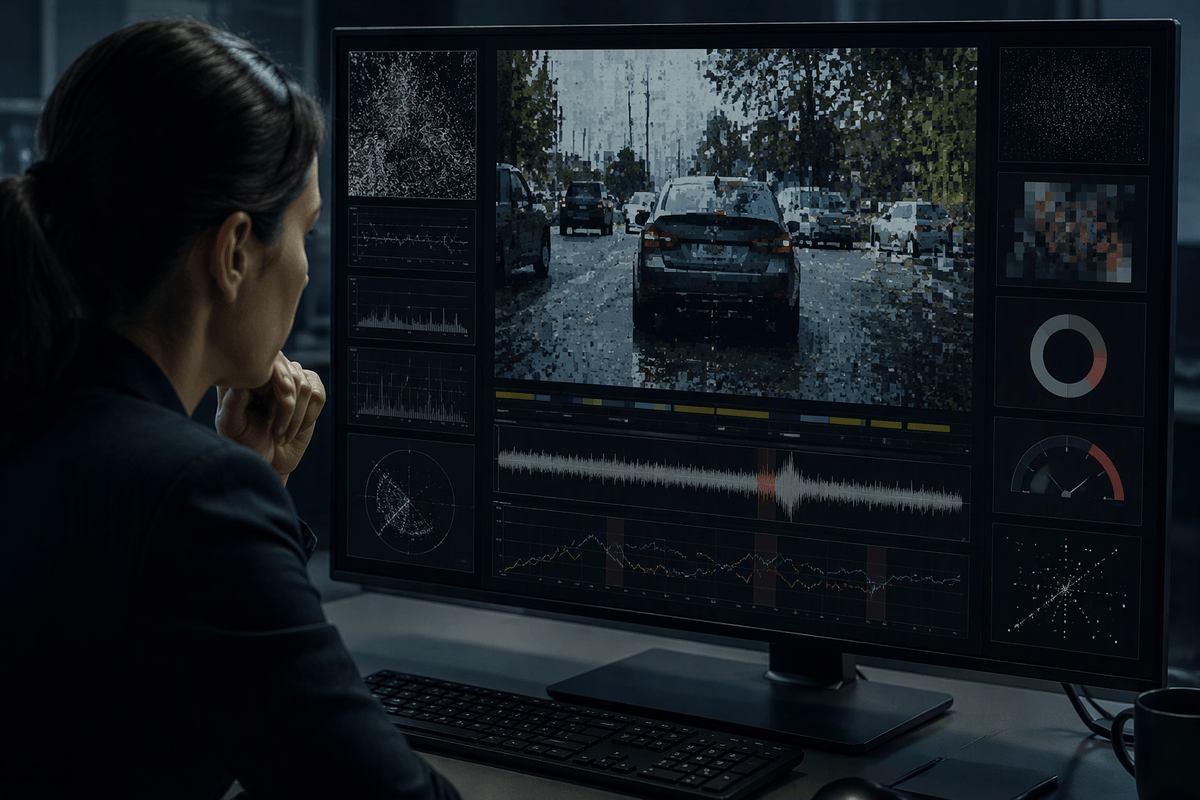
AI deepfake detectors are often promoted as a quick way to determine whether a video or audio clip is genuine, but their accuracy is far from settled. Detection methods rely on patterns such as texture inconsistencies, blinking behavior, and vocal artifacts. As generation techniques improve, those patterns may become less reliable. Changes to grain, pitch, compression, or editing can also alter the signals a detector relies on. People creating fake content may test numerous versions and keep the one that appears most convincing to the system.
The quality of the available file creates another difficulty. Many detectors perform better on high-quality originals, while investigators often encounter compressed copies that have been shared repeatedly. Some tools also work best when the originating model is known, information that may be unavailable. False positives carry serious consequences: authentic footage may be mislabeled as fake, giving people another way to dismiss genuine evidence. Detection scores should therefore be treated as one limited piece of evidence, not a final judgment about whether content is authentic.
What actually helps when detection is uncertain
You know the feeling: a clip looks plausible, but you can’t prove it’s real. When that happens, shift from “spot the artifact” to “verify the story.” Start with the source: who first posted it, and do they usually publish original reporting or recycled clips? Then check context: does any credible outlet, official channel, or on-the-ground witness corroborate the same event, time, and location? Look for independent versions from different angles. If the claim can’t wait, share the uncertainty, not the clip. The real constraint is effort: verification takes minutes, and virality takes seconds.