Why Mathematical Work Still Feels Fragmented
A mathematician can move from a handwritten sketch to a computer algebra calculation, a stack of papers, a shared draft, and a proof assistant in the course of one problem. Each tool helps with a narrow task, yet the work between them remains largely manual: copying definitions, checking assumptions, translating notation, and reconstructing the path from an idea to a result.
This fragmentation matters because mathematical progress is not only about obtaining an answer. It depends on preserving why a claim seems plausible, which cases were tested, where a proof became difficult, and what another researcher can verify. Existing software can calculate quickly or check a formal proof precisely, but it rarely connects exploration, exposition, and verification without imposing substantial setup costs.
The Gap Between Discovery and Proof
Consider the common moment when a pattern appears convincing: a computation holds across thousands of examples, a diagram suggests an invariant, or a colleague identifies the right change of variables. That is discovery work. It is provisional, fast, and often dependent on intuition that is difficult to record in a form another person can inspect.
Proof has different demands. Every definition must be fixed, every exceptional case addressed, and every inference made explicit enough to survive skeptical reading. A promising conjecture may require days or months of reformulation before it becomes a statement a proof assistant can check, while a polished informal proof can still conceal an unstated assumption.
Software that narrows this gap would matter if it preserves the trail from experiments and partial arguments to a verifiable result. But the constraint is substantial: it must help organize uncertainty without converting plausible suggestions into claims of proof.
What the Startup Is Actually Building

The useful version of this product is not an automated mathematician that produces finished theorems on command. It is a shared working environment that keeps conjectures, examples, definitions, informal arguments, symbolic computations, and formal proof obligations connected rather than scattered across files and tools.
A researcher might begin by entering a tentative statement and a few computed cases. The system could track the notation, flag definitions that change meaning, generate small counterexample searches, and distinguish evidence from deductions. When an argument becomes stable enough to formalize, it could translate selected pieces into the language required by a proof assistant, while leaving unresolved steps visibly unresolved. Colleagues could then inspect both the polished proof and the experimental path that led to it.
The important claim, then, is integration: reducing the repeated translation between exploratory work and verification. That would not remove the hard intellectual work of choosing the right lemma or abstraction. It may also add overhead, since researchers must record enough structure for the system to be useful. Its value depends on whether that discipline saves more time than it costs.
Can AI Help Without Inventing Results?
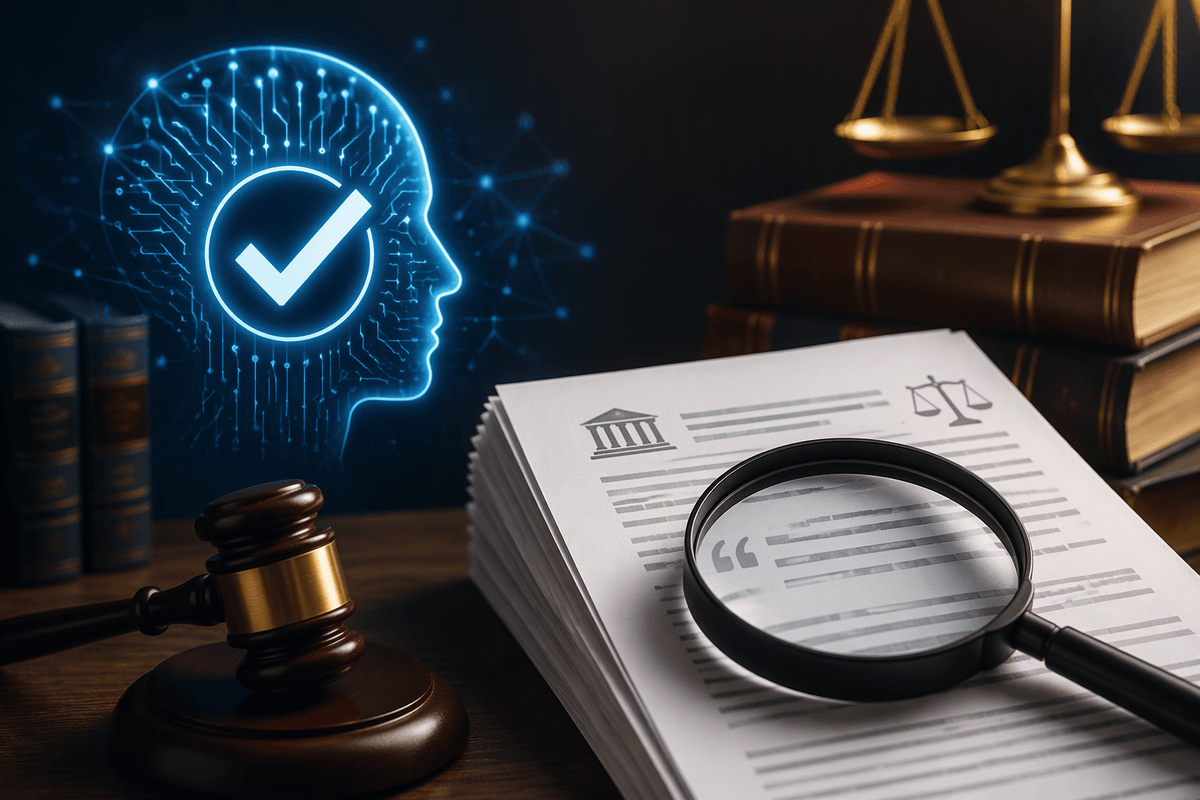
The central test is whether the system maintains a hard boundary between assistance and assertion. Language models are useful for proposing a lemma, restating an argument in clearer notation, finding related definitions, or suggesting where a missing case may lie. None of those actions establishes that the proposed statement is true. A reliable workspace must label them accordingly: conjecture, computational evidence, informal derivation, or formally checked result.
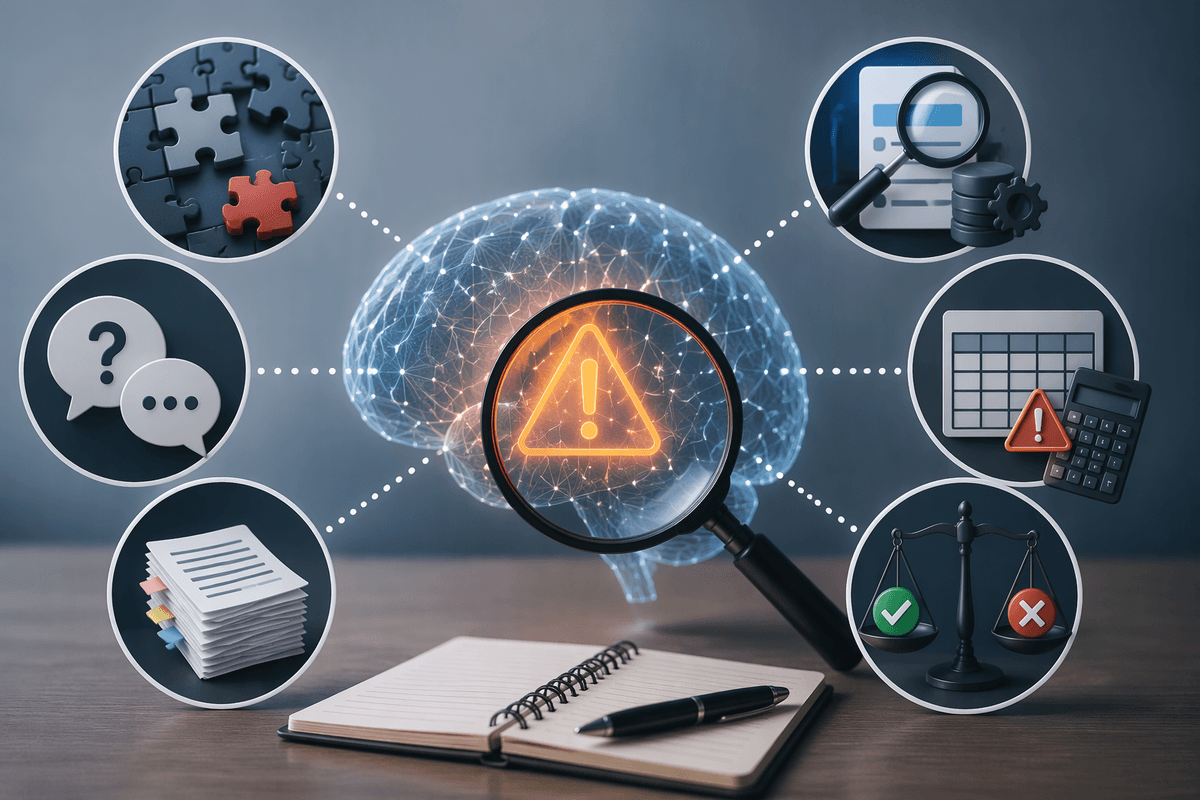
That distinction should persist even when the software makes the next step feel obvious. If it produces a proof outline, the user needs to see which links are supported by a proof assistant, which depend on cited results, and which remain natural-language reasoning awaiting review. Counterexample searches can strengthen confidence, but a large search space is not a proof of absence. Symbolic calculations can expose structure, but they can also inherit an incorrectly specified assumption.
AI is most credible here as a tool for directing attention: surfacing inconsistencies, preparing formalization, and making uncertain steps easy to locate. The cost is that researchers must resist treating fluent output as mathematical authority.
Where Existing Tools Fall Short Today
Most researchers already have some version of this toolkit: a notebook for experiments, a computer algebra system for manipulation, a reference manager, collaborative writing software, and perhaps Lean, Coq, or another proof assistant. The weakness is not that these tools are useless. It is that they rarely share the same mathematical object. A notation change in a draft does not automatically update a computational notebook, and a successful calculation does not become a documented proof obligation.
Proof assistants provide the strongest guarantee, but their entry cost remains high. Formalizing ordinary background facts can take longer than the original argument, especially when suitable libraries, notation, or automation are missing. Computer algebra systems are faster to adopt, yet they generally assume the user has posed the right expression and may obscure domain restrictions or exceptional cases. General-purpose AI tools add another layer of convenience, but often lack durable links between a suggestion, its sources, its assumptions, and its later verification.
The practical opportunity is therefore not to replace these systems, but to make their boundaries less costly to cross.
Adoption Depends on More Than Clever Software
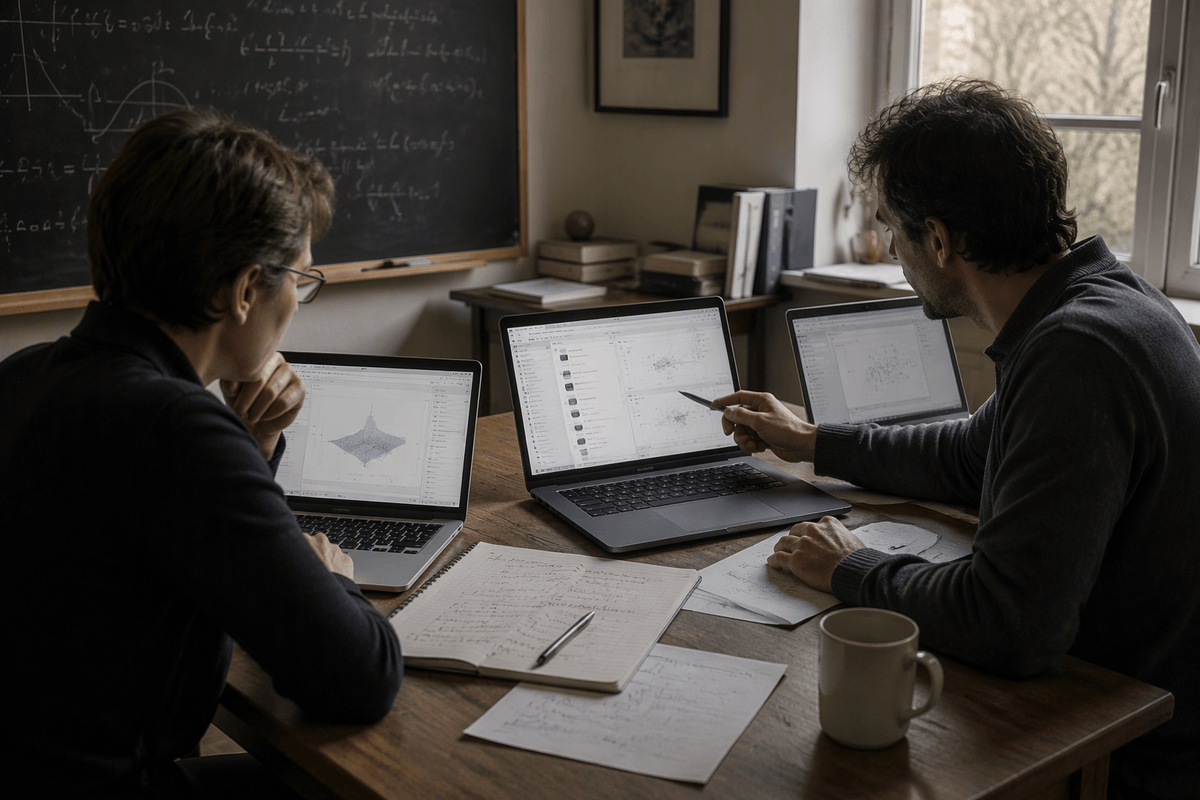
A department or research group will not change its habits merely because a new interface is more capable. Mathematicians need confidence that years of notes, code, and formal developments will remain accessible; that collaborators can use the system without adopting identical workflows; and that sensitive unpublished ideas are handled appropriately. Compatibility matters as much as novelty. A workspace that cannot exchange material cleanly with existing proof assistants, computer algebra systems, and writing tools risks becoming another isolated repository.
Trust also develops through ordinary use rather than ambitious demonstrations. Researchers will ask whether the software preserves authorship, records who changed a definition, produces citations that can be checked, and behaves predictably when an AI suggestion is wrong. Training time is a real cost, particularly for small groups with limited technical support. The most plausible path to adoption is therefore incremental: solve a recurring coordination problem well, fit into established practice, and earn reliance before asking users to reorganize their mathematics around it.
A Tool for Math, Not a Substitute
The most useful test is simple: does the workspace leave mathematicians better able to see, challenge, and communicate the reasoning than they were before? If it reduces lost context, exposes unsupported steps, and makes formal checking less disconnected from exploratory work, it could change the daily mechanics of research in a meaningful way.
It would still be a tool, not a source of mathematical judgment. Choosing worthwhile questions, recognizing a useful abstraction, and deciding when an argument explains rather than merely verifies remain human tasks. Working mathematicians should demand clear provenance, exportable records, and visible uncertainty. The software earns a place in the process only when it makes rigor easier to practice without making confidence easier to fake.